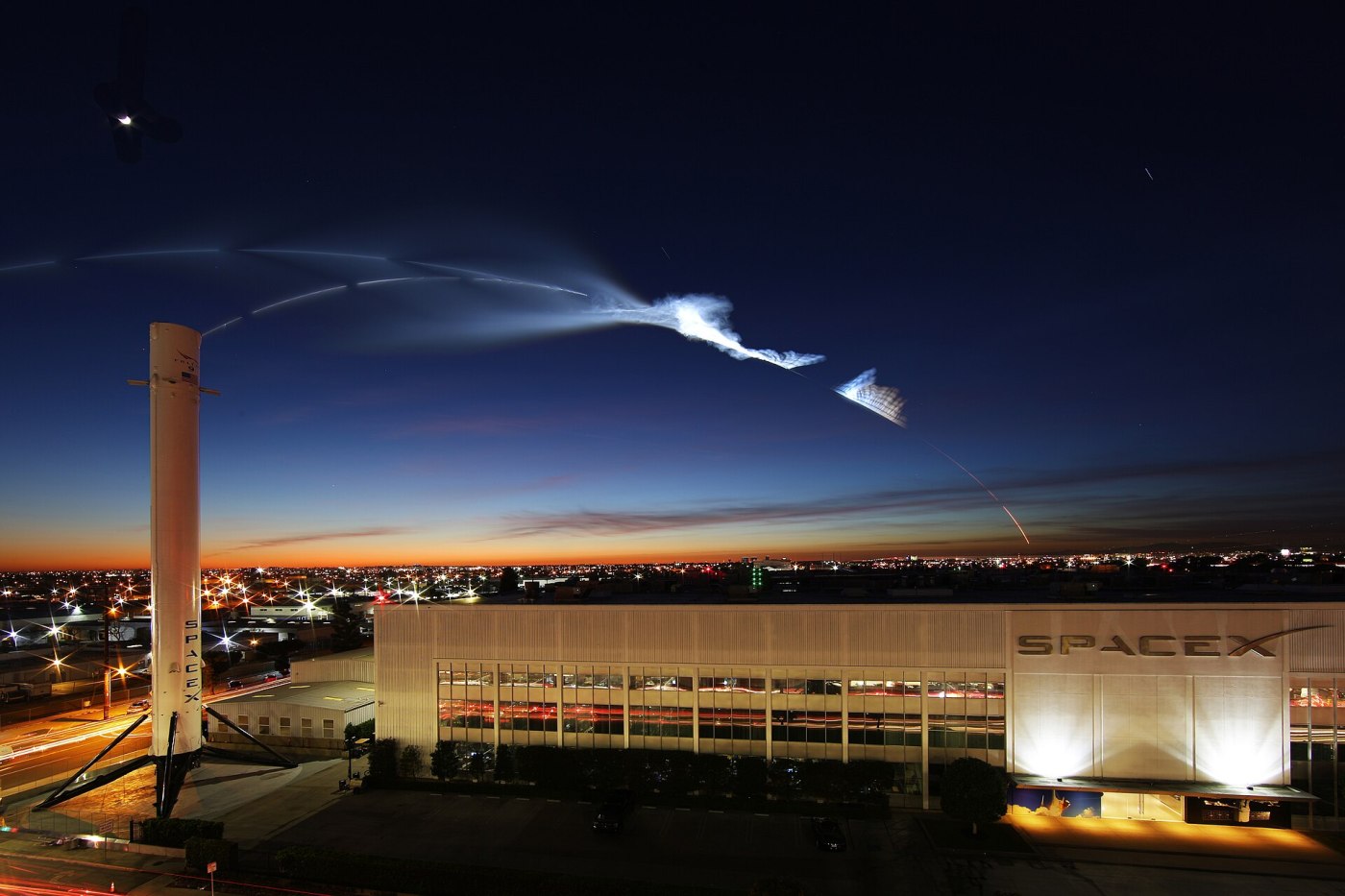
On June 12, 2026, the rocket-launching company SpaceX finally made its highly anticipated initial public offering (IPO) on Wall Street.
Class A shares began trading at $135 on the Nasdaq under the ticker SPCX. By the end of its first day, the stock closed just over $160, minting majority shareholder Elon Musk the world’s first U.S. dollar trillionaire.
SpaceX isn’t new. It was founded by Musk back in 2002 with a portion of the fortune he earned from the sale of one of his previous well-known companies, PayPal.
At the time, Musk’s vision for SpaceX was to make transportation interplanetary. He would talk about goals that sounded like something straight out of science fiction, such as humans eventually colonizing other planets – particularly Mars.
While Musk still promotes this ideology today, investors appear to be more interested in some of its other activities and future potential. Here’s what you need to know about the big SpaceX IPO and what it could mean for your nest egg – whether you bought the stock or not.
How Big Was the SpaceX IPO?
As of this writing, SpaceX holds the record for the largest IPO in history. It raised an unprecedented $75 billion and put the company at a valuation of $1.77 trillion.
For context, Facebook (now Meta Platforms) went public in 2012 with an initial IPO price of $38 per share and closed at $38.23 on the first day. This gave Facebook a peak market capitalization of over $104 billion – about 1/17 of the value of SpaceX before adjusting for inflation.
An IPO of this magnitude demonstrates the current climate and excitement around the tech industry. Potentially, it might set the bar for other players in this field, such as Anthropic and OpenAI. As they inch closer to their own IPOs, one could assume that they’re looking at what’s happening with SpaceX with great enthusiasm.
What Makes SpaceX So Desirable?
While SpaceX is mostly known for periodically sending rockets into space, it doesn’t seem to be the primary motivation attracting investors. Instead, they seem to be more interested in how the subsidiaries within this company may one day work together.
In recent years, SpaceX has become somewhat of an umbrella for several of Musk’s other ventures and acquisitions:
- xAI – Musk’s AI development company and competitor of OpenAI, with tools like Grok
- X – The social media platform formerly known as Twitter, which has become Musk’s exclusive media outlet
- Starlink – SpaceX’s satellite communications and internet service branch
- Starshield – A dedicated division focusing on national security and military satellite applications.
- Etc.
Particularly with AI, it’s these subsidiaries that have investors looking at SpaceX as an enticing long-term bet. Currently, the company believes it could eventually reach a market valuation of $28.5 trillion.
However, it’s important to keep perspective. The IPO valuation and these projections are wildly high – especially considering the company lost $4.94 billion in 2025. Currently, Starlink is the only profitable arm generating $3.26 billion in revenue in the latest quarter and accounting for 69% of the company’s total revenue stream. Meanwhile, the space and AI units lost $619 million and $2.5 billion, respectively.
Prior to the IPO, Morningstar analysts put out a statement saying, “We think the company has been significantly overvalued and investors will have opportunities to buy the stock at more attractive levels after the IPO.” Their conclusion was that SpaceX is really worth closer to $780 billion – roughly 48% below its private market valuation of $1.5 trillion.
Why Are Investors Excited Then?
You might ask: Why in the world would someone want to put their money into a company that’s currently operating at a loss?
One answer might be that we’ve seen this movie before. Musk has a strong track record of taking companies from nothing to something.
For instance, consider Musk’s other crown jewel, Tesla (TSLA). If you had invested $1,000 in TSLA back in 2010 during the IPO, today it would be worth approximately $238,000 to $257,000 – a massive 239x to 256x gain.
That’s not a phenomenon that’s exclusive to Musk-branded companies. Consider other well-known tech companies:
- $1,000 in Netflix back in 2004 would be worth $417,305 today.
- $1,000 in Nvidia back in 2005 would be worth $1,293,148 today.
In other words, there’s potentially a huge upside, and many investors are willing to take the risk. Hence, this is one of the many reasons there’s been so much optimism surrounding this IPO from both institutional and retail investors alike.
Can You Buy Shares?
Of course! Once a company holds an IPO, it trades openly in the stock market for anyone to buy.
Even if you can’t afford a full share of SpaceX, most brokerages support fractional trading – meaning you could invest whatever amount you want.
However, as with any investment, you should always approach it with a sense of caution. Ask yourself, “Is this truly a good investment? Or am I just experiencing FOMO (fear of missing out)?”
For this reason, many financial professionals allocate a very small percentage of their capital to any one stock or investment. That way, if expectations aren’t met, then the stock doesn’t take your entire portfolio down with it.
How You Might Invest in SpaceX Without Realizing It
Because of its massive IPO valuation, SpaceX is already in the process of joining one of the largest and most popular index funds available: the Nasdaq-100.
This is a benchmark that’s delivered ridiculous gains over the past decade, thanks mainly to tech companies. The Invesco QQQ ETF (QQQ) and JPMorgan Nasdaq Equity Premium Income ETF (JEPQ) are two examples.
Due to a “fast-track” rule implemented by the Nasdaq, a company of this magnitude may be eligible for inclusion after just 15 days of trading.
Why is that important? Because millions of investors hold Nasdaq-related funds in their brokerage and retirement accounts. Therefore, if SpaceX gets added to the index, then they’ll automatically become investors and become dependent on its performance.
This will not be true of all major indices. SpaceX will not be eligible to join the S&P 500 until mid-2027 at the earliest, and it may be much longer before it can become part of the Dow Jones Industrial Average (DJIA).
The Bottom Line
SpaceX may go down in history as one of the biggest IPOs ever. But that doesn’t necessarily mean you should rush to buy it. As with all investments, weigh the potential risks and don’t succumb to FOMO.
If you’re optimistic about SpaceX or any other technology stock, review your budget to determine how much money you have available to invest. Play it safe and never allocate too much into any single company. Diversify your holdings across several types of assets that will support your long-term financial plans and needs.
Featured image credit: Wikipedia

