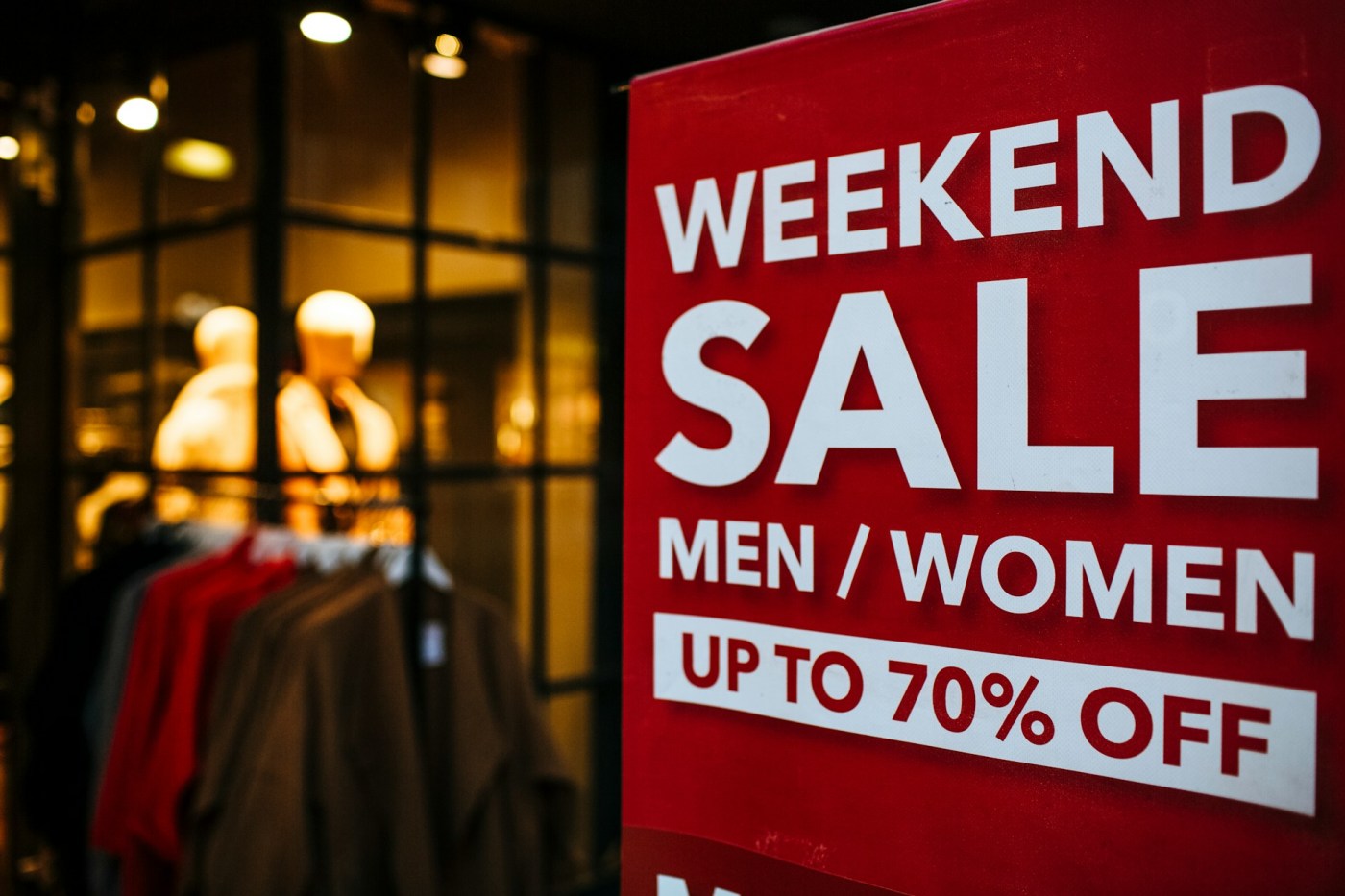
Deals, deals, deals! It’s beginning to feel like every time you go to the store or scroll through your favorite social media app there’s some deal of a lifetime waiting for you. Marketing has gotten really good at enticing buyers, and unfortunately, it’s working like magic.
Despite continuous issues with inflation, Americans are still spending money like there’s no tomorrow. In fact, according to the Federal Reserve Bank of New York’s Q1 financial report, we collectively owe $1.2 trillion dollars in credit card debt.
Before you can become more responsible with your money, it will be important to recognize the tactics that businesses are using to trick you into spending more. In this post, we’ll cover one specific method called “spaving”.
What is Spaving?
Spaving is a marketing strategy that encourages you to spend more to save more. Hence, it’s a mashup of the words “spending” and “saving”. Often this is done at the expense of buying more than you would have typically done otherwise.
Common Spaving Traps
Spaving may seem like a trendy new word. However, the marketing tactic itself has been around for decades.
The following are a few of the most frequently used spaving traps you might encounter:
- BOGO (Buy one, get one free). Essentially instead of making an item half price, the retailer gets you to buy two items.
- Spend more, save more. If you’ve ever gone to a store and they handed you a coupon at the checkout for next time that says something like “Save $20 after spending $50,” then you know this trick. It’s how they get you to come back over and over again.
- Limited time coupon. How many times have you received an email with a coupon code that expires by the end of the weekend? Sure does make you feel like you better use it soon!
- Spending more to get free shipping. Ever wanted to buy something for $20 but the shipping was also $20, so it didn’t feel worth it? If the retailer offers you free shipping if your total order is above $50, that will certainly make you want to buy more items.
- Paying for a subscription to receive a better discount. Speaking of free shipping, anyone have Amazon Prime? It’s not exactly “free” shipping when you’re paying $139 per year for membership.
Why Spaving Is Actually a Financial Pitfall
If spaving is just another way for businesses to get more from you, then why does it work so well on consumers?
Simple. Because it plays on your basic human emotions. It promotes making more frequent impulsive purchases rather than those based on logic.
Before you saw that advertisement or were given a coupon code, you were probably perfectly fine the way you are. However, once you knew there was money to be saved, it created a false sense of necessity. Suddenly you “had” to have that product and take advantage of that savings even though you didn’t really.
Marketers are masters of playing on our fear of missing out (or FOMO). In the fields of cognitive science and behavioral economics, this is referred to as loss aversion. Loss aversion is the cognitive bias in which a situation is perceived as being worse if it is framed as a loss, rather than a gain. It’s why we avoid taking a risk even though there might be an equal chance of securing a greater gain.
A good example of this phenomenon is holding onto a losing stock for too long. Even though it’s lost its value and the money would be better off reinvested in something else, it’s too painful to sell it knowing you lost money.
In a similar way, product marketing preys upon our same bias. We’d hate to “lose a good deal”, even though not spending money in the first place was probably the better option.
How to Avoid Spaving
Before you become the victim of another deal that’s too good to resist, try the following techniques instead:
Pause
It’s human nature to chase after something we want. However, a better question to ask yourself is why you want it in the first place.
Any time someone puts a time restraint or creates a false sense of urgency, that’s usually to protect their interests, not yours. It’s also a red flag that they need your money more than you need their product.
The best approach you can take for yourself is not to allow yourself to feel pressured. Stop, breathe, and allow yourself to think logically about whether or not you really need the item.
Know Your Wants
Are you considering buying this product because you really need it, or just because there’s some potential savings involved? If you’re only motivated by the savings, then chances are it’s not really a necessity.
A good way to differentiate between the two is to make a list. Begin writing down items you actually do want or need. Go ahead – have fun with it!
This way, the next time you get an advertisement or offer, if it’s for something not on your list, then you’ll know that’s an automatic hard pass.
Wait 24 Hours
Suppose you’re having difficulty telling the difference between spaving and truly wanting to buy something. Another helpful way to tell is to give it 24 hours. Sleep on your decision. If by the next day you truly feel like it’s something you want and the deal being offered makes sense, then go for it. However, I’m going to bet that after some time has passed, you might come to your senses and let that opportunity pass you by.
Stick to Your Budget
No matter how much money you might save or how good a deal is, you should never compromise your budget. Your budget is your pre-arranged plan for how you should be spending your money. Though it can certainly have some flexibility, it’s primarily meant to provide structure to your finances. Therefore, if the thing you’re being tempted to buy doesn’t fit, then it’s a no-go.
Again, loss aversion can make you feel like you’re passing something up. But stick to your senses. Your budget is your path to financial freedom, not spaving.
Featured image credit: Unsplash

